Motorcycle Financing in Canada: Rates, Requirements & How to Get Approved
23 August 2026Riding season in most of Canada is short, which changes how motorcycle financing actually works compared to financing a car. If you're pricing out a street bike, cruiser, sport bike, or commuter machine for personal use, the loan math and the questions a lender asks are different enough from a car loan that it's worth understanding before you sign anything.
How Motorcycle Loans Differ From Car Loans
A car is usually a daily-use asset that holds a fairly predictable depreciation curve. A motorcycle, especially in a climate where it sits in a garage for five or six months a year, depreciates differently and gets ridden hard in the months it's used. Lenders account for that. Motorcycle loan terms tend to run shorter than car loan terms, often in the 36 to 60 month range rather than 72 or 84, partly because bikes lose value faster in the used market and partly because the loan-to-value math gets uncomfortable past a certain point.
Insurance matters more here too. Motorcycle insurance premiums vary a lot by engine size, rider age, riding history, and province, and a lender may ask about your insurance situation before approving financing, since an uninsured or underinsured bike is riskier collateral. If you're switching from a smaller bike to something with a lot more horsepower, expect your insurance quote to jump, and factor that into what you can actually afford to finance.
Then there's the seasonal budgeting problem. You're making twelve monthly payments a year on a vehicle you might ride for six. Some riders find it easier to line up their loan term with a spring purchase so the first payment lands right as riding season starts, rather than paying through a full winter before ever getting the bike out of the garage. It's worth running the numbers both ways before you commit.
What Lenders Actually Look At
Motorcycle lenders in Canada look at roughly the same core factors as auto lenders: credit score, income, existing debt load, and employment stability. But a few things get extra scrutiny. Because motorcycles are considered higher-risk collateral than cars (harder to resell quickly, more exposed to weather and theft, and tied to a smaller buyer pool), some lenders price in a slightly higher rate or ask for a larger down payment than they would on a similar-value car loan.
Riding experience can come up too, particularly for high-displacement sport bikes or anything a first-time rider might be financing. It's not universal, but don't be surprised if a lender or dealer asks whether you've held a motorcycle license or completed a rider training course. A brand-new rider financing a 1000cc sport bike is a different risk profile than an experienced rider stepping up from a smaller displacement machine, and pricing sometimes reflects that.
Debt-to-income ratio carries a lot of weight too, maybe more than people expect. A lender isn't just looking at whether you can afford the bike payment in isolation; they're looking at what that payment does to your overall monthly obligations once rent or mortgage, other loans, and credit cards are already accounted for. Two applicants with identical credit scores can get different offers if one is already carrying a heavier debt load.
New vs. Used Motorcycle Financing
New motorcycle financing usually comes with better rates, since the bike carries a manufacturer warranty and its value is easier to establish. Dealers also sometimes run promotional rates on new inventory, similar to what you'd see with a new car.
Used motorcycle financing is where things get more variable. A five-year-old bike with 20,000 km on it and full service records is a very different risk than a 15-year-old bike bought privately with no paper trail. Private-sale used motorcycle loans exist, but expect more paperwork, possibly a mechanical inspection requirement, and a rate that reflects the added uncertainty. If you're new to financing a used vehicle in general, our guide to used car loans in Canada covers a lot of the same due-diligence steps that apply to a used bike purchase, even though it's written with cars in mind.
Down Payments and Loan Terms
There's no single number that applies to every buyer, but a down payment somewhere in the 10 to 20 percent range is common for motorcycle financing, and putting more down helps offset the faster depreciation we mentioned earlier. A larger down payment also reduces how "upside down" you could get on the loan if you need to sell or trade the bike in year two or three. Our breakdown of how down payments work on a vehicle loan in Canada walks through the general mechanics, most of which carry over directly to motorcycle financing.
On terms, shorter is usually cheaper in total interest even though the monthly payment is higher. A 36-month term on a $12,000 bike will cost meaningfully less in interest than stretching the same loan to 60 months, even at a similar rate. It comes down to what monthly payment actually fits your budget once insurance, gear, and maintenance are factored in.
How Credit Tier Affects Your Rate
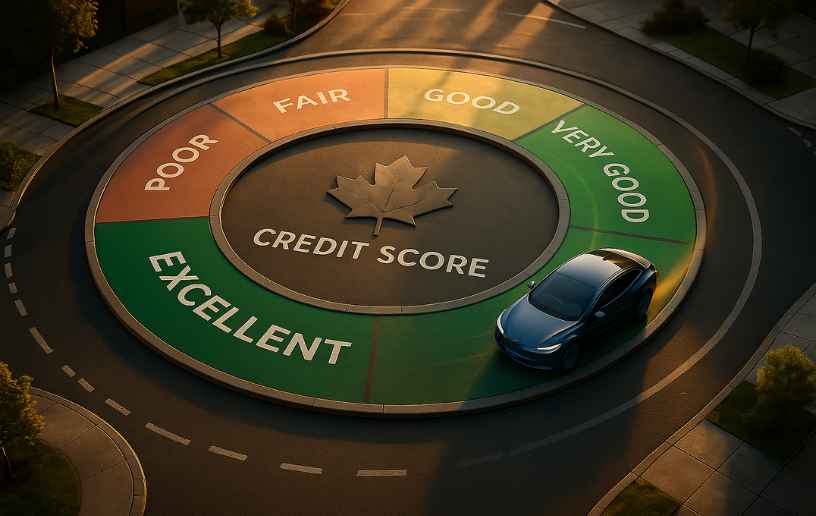
Credit tier moves the needle on motorcycle financing the same way it does on any vehicle loan. Riders with strong credit, typically a score in the high 600s or above, alongside stable income and manageable debt, tend to see the most competitive rates and the widest choice of lenders. Riders with limited or damaged credit can still get financed in many cases, but the rate reflects the added risk, and the down payment requirement is often higher.
If your credit history is thin or bruised, it's worth reading our comparison of no-credit versus low-credit vehicle loans, which explains how lenders in Canada typically structure approvals for each situation. No credit score guarantees approval on its own. Every application gets assessed on the full picture, including income, debt ratio, and the specific bike being financed.
A Note on Personal Loans vs. Motorcycle Loans
Some buyers consider financing a motorcycle through a general personal loan instead of a dedicated vehicle loan, especially for a lower-cost used bike. Both can work, but they behave differently: a personal loan usually isn't secured against the bike, which changes the rate and how a lender evaluates risk. Our article on personal loans versus vehicle loans goes through the tradeoffs in more detail, and most of the reasoning applies whether the vehicle in question is a car or a bike.
Practical Tips for Getting Approved
Check your credit report before you apply, not after a lender pulls it. Fixing an error or paying down a small balance ahead of time can move you into a better tier.
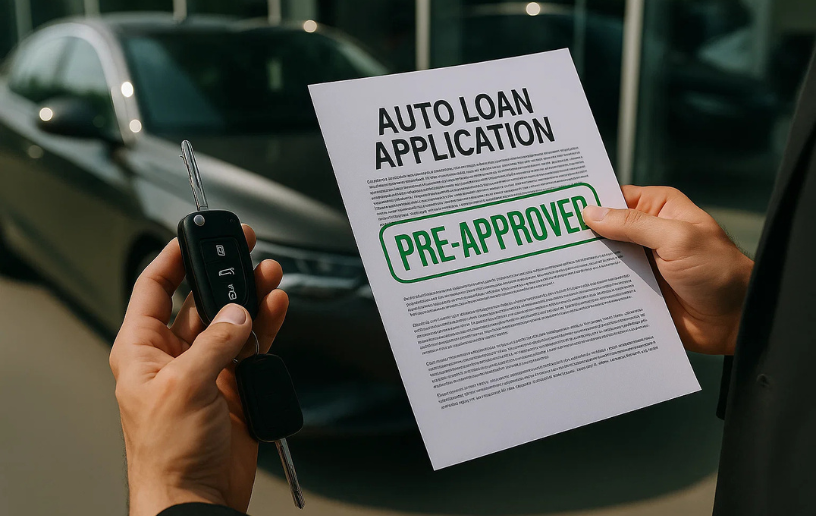
Get pre-approved before you start shopping. Knowing your budget in advance keeps you from falling for a bike that's out of range once insurance and gear are added in. It also gives you leverage at the dealership, since you're not negotiating financing and price at the same time.
Be honest about total cost. The purchase price is only part of it. Insurance, a helmet and riding gear, storage, and maintenance all add up, and a lender assessing your application will factor debt-to-income ratio, not just the loan payment in isolation.
If you're actually shopping for a UTV, ATV, snowmobile, or other powersports equipment rather than a street bike for personal riding, financing works a bit differently, particularly if the vehicle has a business or farm use. Our guide to financing powersports vehicles in Canada covers that scenario separately.
Consider the season. Applying in early spring, ahead of peak buying season, sometimes means less competition for dealer financing promotions and more time to shop around before you actually need the bike. Wait until May and you're shopping alongside everyone else who just remembered riding season exists, which isn't the end of the world, but it does mean less negotiating room.
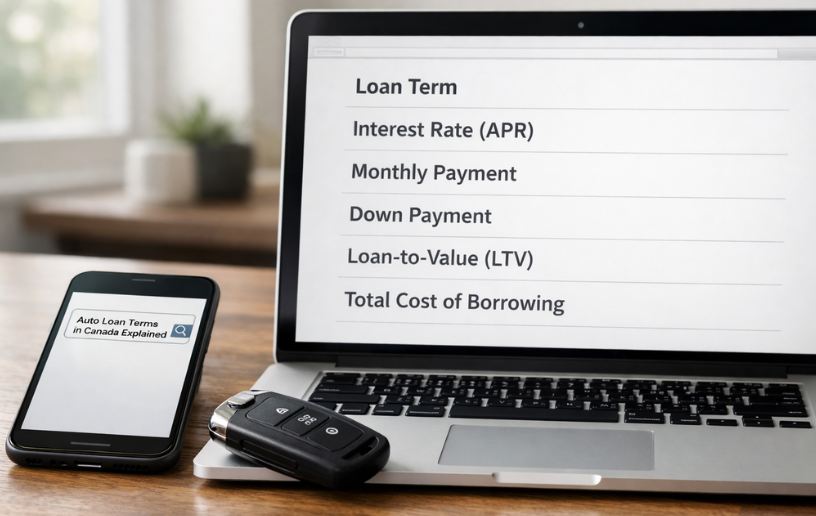
Shop the rate, not just the payment. A lower monthly number can hide a longer term or a higher rate, and dealers know most buyers focus on the payment first. Ask for the total cost of the loan, term length, and rate up front, and compare that against a pre-approval you got somewhere else. It takes an extra ten minutes and it's usually worth it.
Ready to see what you qualify for? You can get pre-approved for motorcycle financing in a few minutes through our online application, with no obligation to accept an offer. Start your pre-approval here and see real rate ranges based on your situation before you set foot in a dealership.